01
Solid-state, sealed, durable
Every unit is capacitor-discharge solid-state, sealed to IP67 or IP68 against water and dust, and housed in HD urethane. Tested from −20°F to 140°F. Lifetime warranty against manufacturing defects.
 All ProductsBrowse every BLASTBAG, liner, plug, inflator and tool MTi makes — 400+ field-tested SKUs.107
 BLASTBAGS™Inflatable stemming bags — Solo, Aero, Evo and Bag Spider. Cut powder use and improve fragmentation.5
 Blasthole LinerBLASTSHIELD™ PLUS and Heavy-Duty Poly liners — keep emulsion dry in wet, fractured ground.2
 Blasting Machines & Initiation EquipmentHB-series electric and non-electric blasting machines — MSHA-approved, with circuit continuity.14
 Collar / Hole ProtectionCOLLARCONE hole savers and foam cubes — stop collar collapse, debris fall-in and redrills.8
 Delineation & MarkingPINTAGs, solar flashers, stake flags and bandanas — mark, flag and light up the bench.6
 Electrical Measurement DevicesDigital ohmmeters and circuit continuity testers — verify your shot before you fire.2
 In-Hole AccessoriesSLUMPSTOPPA brushes, multifit spiders, booster locks and shot bags — for reliable, well-loaded holes.5
 Inflation EquipmentInflators, droplines, couplings, hose reels and repair kits — full setup for chemical or air inflation.7
 Locks / StoragePadlocks, load locks, steering locks and bin skirts — secure magazines, vehicles and gear.4
 LoadingLoad poles, C-hooks, barbed retrievers, tamping plugs and adaptors — everything to deck and prime.7
 MeasuringMiTiMEASURE tapes, dip weights, laser hypsometers and GPS — drill depth, dip and field measurement.8
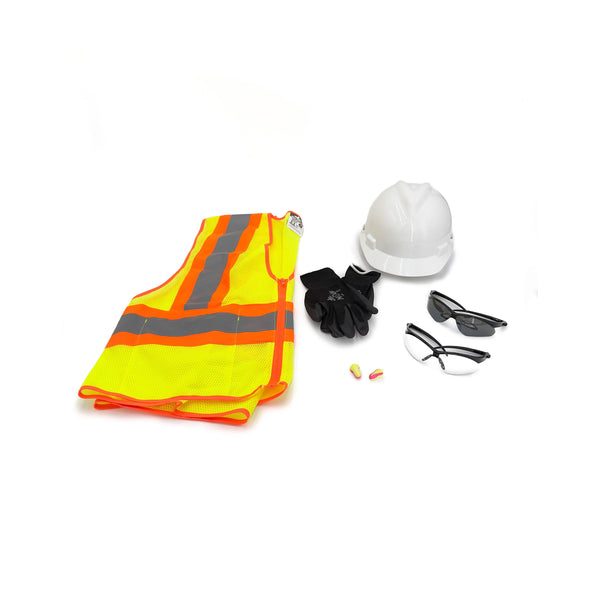
 SafetyHi-vis vests, fall protection, earplugs, lightning detectors and first-aid — keep your crew safe on the bench.21
 Signs/PlacardsDanger, Keep Out and Explosives warning signs plus DOT placards — adhesive, aluminum and magnetic.4
 Stemming PlugsROCKRIVET, MITIPLUG, SPRINGLOCK and MARS — friction stemming plugs that lock the deck and hold the gas.6
 ToolsCordcutters, shot firer mirrors, blasthole cameras, MITI hooks and clips, smoke dischargers and batteries.21
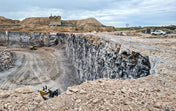
A blasting machine is the last piece of equipment between you and a live shot. If it doesn't fire — or doesn't deliver enough energy to fire every cap in the circuit — it doesn't matter how well you drilled the pattern or loaded the holes. MTi's range covers compact electric units for small shots, high-capacity machines for large production blasts, non-electric shock-tube firing devices, dual-initiation machines for mixed circuits, and MSHA-approved permissibles for underground and coal. Every unit is solid-state capacitor discharge, sealed against water, dust, and debris.
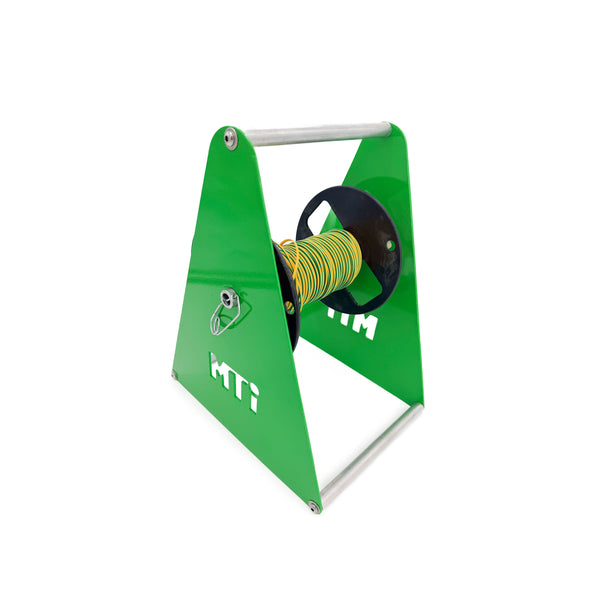
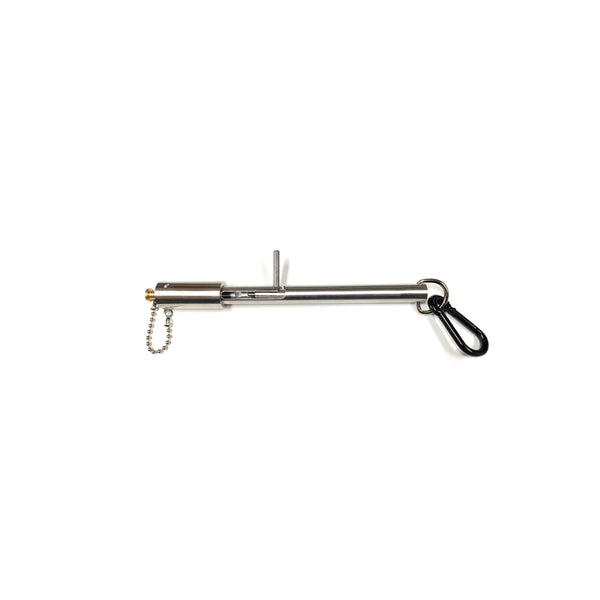
BlastReel - Handheld blaster reel for spooling wire. Made of aluminum and weighs 3.2lbs.
MTi blasting machines cover firing capacities from 50 ohms for small construction shots up to 250 ohms for large production circuits. Every unit is solid-state capacitor discharge, sealed to IP67 or IP68 against water and dust, housed in HD urethane, tested from −20°F to 140°F (−29°C to 60°C), and backed by a lifetime warranty against manufacturing defects.
The number that matters most is firing capacity, measured in ohms. A machine rated for 50 ohms will handle a small series. A 135-ohm unit will fire roughly 65 caps plus lead line. A 220- or 250-ohm unit will fire a much larger production circuit. Underpowered machines are one of the causes of misfires in the field, so match the machine to the shot with headroom — don't run the circuit to the edge of the rating.
Small construction. A compact 50-ohm hand-held unit like the HB-10 clips to your belt and fires off a 9V battery.
Mid-sized surface shots. A 135- to 230-ohm machine with a built-in circuit continuity indicator (HB-55 or S-355) gives you capacity plus pre-fire verification.
Large production circuits. A 220- to 250-ohm unit with higher firing energy like the HB-320 handles bigger series without running the edge of the rating.
Underground coal and gassy mines. The HBR-20P is MSHA-approved (Approval No. 16E-15) and auto-shunts output in 4.5–8 milliseconds after firing, per federal requirements.
Mixed electric and shock-tube benches. The HB-SBS and S-3 are dual-initiation units — one machine, both circuits, with automatic mode selection based on what is connected.
Compatible with standard electric blasting caps, electric breech systems, and non-electric shock-tube starters. All units feature heavy-duty push-down binding posts for glove-friendly lead attachment and sequenced two-switch Charge/Detonate operation.
 HB-10 Electric Initiator HB-10 Electric Initiator
|
 HB-55 Electric Blasting Machine HB-55 Electric Blasting Machine
|
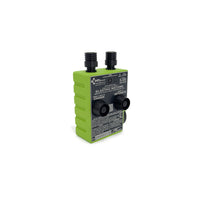 S-355 Compact Electric Blasting Machine S-355 Compact Electric Blasting Machine
|
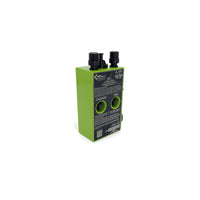 HB-SBS Blasting Machine - Dual Initiation HB-SBS Blasting Machine - Dual Initiation
|
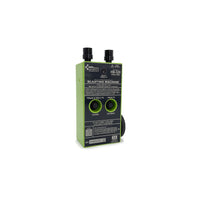 HB-320 Rugged Waterproof Blasting Machine HB-320 Rugged Waterproof Blasting Machine
|
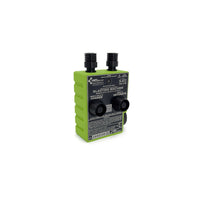 S-412 Blasting Machine with Circuit Continuity S-412 Blasting Machine with Circuit Continuity
|
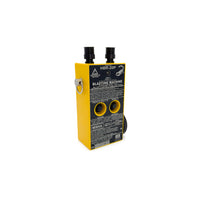 HBR-20P Blasting Machine - MSHA Approved HBR-20P Blasting Machine - MSHA Approved
|
 S-2 Non-Electric Blasting Machine S-2 Non-Electric Blasting Machine
|
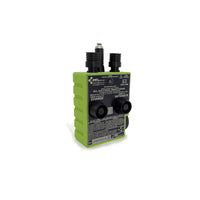 S-3 Powerful Blasting Machine S-3 Powerful Blasting Machine
|
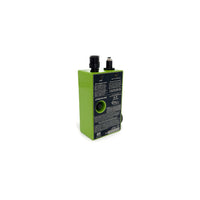 S-27 Blasting Machine S-27 Blasting Machine
|
 HR-3 Mechanical Starter HR-3 Mechanical Starter
| |
|---|---|---|---|---|---|---|---|---|---|---|---|
| Initiation Type | Electric | Electric | Electric | Dual Initiation | Electric | Electric | Electric | Non-Electric | Dual Initiation | Non-Electric | Mechanical |
| Firing Cycles Per Battery | ~300+ | ~300+ | ~300+ | ~250+ | ~150+ | ~250+ | ~200+ | — | ~250+ | — | — |
| Battery Type | 9V | 9V | 9V | 9V | AA | 9V | AA | — | 9V | — | — |
| Output Volts DC | 150 | 225 | 350 | 450 | 330 | 400 | 350 | 400 x 2 | 400 | 400 | 400 |
| Output Joules | 1.25 | 4 | 5 | 5 | 19 | 12 | 6.125 | 12 x 2 | 12 | 12 | 12 |
| Initiation Resistance (ohms) | 50 | 135 | 230 | 250 | 220 | 240 | N/A | — | 240 | — | — |
| Estimated Single Series Caps | 20 | 62 | 110 | 120 | 105 | 115 | 20 | — | 115 | — | — |
| Waterproof | ✓ | ✓ | ✓ | ✓ | ✓ | ✓ | ✓ | ✓ | ✓ | ✓ | — |
| MSHA Approved | ✗ | ✗ | ✗ | ✗ | ✗ | ✗ | ✓ | ✗ | ✗ | ✗ | ✗ |
| Rapid Charging | ✓ | ✓ | ✓ | ✗ | ✓ | ✗ | ✓ | ✗ | ✗ | ✗ | ✗ |
| Detachable Belt Loop | ✓ | ✗ | ✓ | ✗ | ✗ | ✓ | ✓ | ✓ | ✓ | ✗ | ✗ |
| Continuity Indicator | ✗ | ✓ | ✓ | ✗ | ✗ | ✓ | ✗ | ✗ | ✓ | ✗ | ✗ |
| CE Approved | ✓ | ✗ | ✗ | ✗ | ✓ | ✗ | ✗ | ✗ | ✗ | ✗ | ✗ |
Swipe to see all columns →
Pick the HB-10 when you are firing small construction shots and want a compact, hand-held electric initiator. 50-ohm capacity, 9V battery, fits on your belt. Roughly 20 caps per single series.
Pick the HB-55 for mid-sized electric shots that need built-in circuit continuity verification. 135 ohm capacity, fires roughly 62 caps in single series.
Pick the S-355 when you need 230-ohm capacity in a compact form factor. Continuity indicator built in, rapid charge, fires roughly 110 caps per single series.
Pick the HB-SBS when crews switch between electric and shock-tube circuits. Auto-detects what is connected. 250-ohm electric capacity, fires roughly 120 caps single series.
Pick the HB-320 for large production circuits and harsh environments. 220-ohm capacity, 19-joule output, AA-battery powered, CE approved. Roughly 105 caps single series.
Pick the S-412 for large electric shots where pre-fire continuity verification is critical. 240-ohm capacity, continuity indicator, fires roughly 115 caps single series.
Pick the HBR-20P for underground coal and gassy metal/non-metal mines. MSHA-approved permissible unit, auto-shunts output 4.5–8 ms after firing. AA battery, roughly 20 caps single series.
Pick the S-2 for shock-tube firing on large surface benches. Two 400-volt outputs, 12 joules each. Immune to stray current and RF energy.
Pick the S-3 when you need a high-energy dual-initiation machine. 12-joule output, 240-ohm capacity, continuity indicator. Fires roughly 115 caps single series.
Pick the S-27 as a robust non-electric shock-tube firing device. 400-volt, 12-joule output. Heavy-duty build for production benches.
Pick the HR-3 when you want a battery-free mechanical starter for shock-tube initiation. No electronics, no batteries, no charging — a reliable backup for any non-electric circuit.
Electric machines fire electric detonators through insulated leg wires. Precise and testable, but electric caps are sensitive to stray current, static, and RF energy — so leads have to be shunted and RF safe distances followed.
Non-electric machines fire shock-tube starter lines with a high-voltage spark. Shock tube is immune to stray current and RF, which is why it is common on large surface benches.
Dual-initiation units handle both circuits in one tool — useful when crews switch between systems.
MSHA-approved permissibles are required for underground coal and gassy metal/non-metal mines. These machines auto-shunt electrical output in milliseconds after firing to meet federal safety requirements.
Reliable in every condition — sealed, tested, and field-proven across surface, underground, and coal operations.
Every unit is capacitor-discharge solid-state, sealed to IP67 or IP68 against water and dust, and housed in HD urethane. Tested from −20°F to 140°F. Lifetime warranty against manufacturing defects.
From 50-ohm hand-helds for small construction up to 250-ohm units for large production circuits. Match the machine to the shot with headroom — never run the circuit to the edge of the rating.
Heavy-duty push-down binding posts for glove-friendly lead attachment. Sequenced two-switch Charge/Detonate operation prevents accidental discharge. MSHA-approved units auto-shunt within milliseconds of firing.
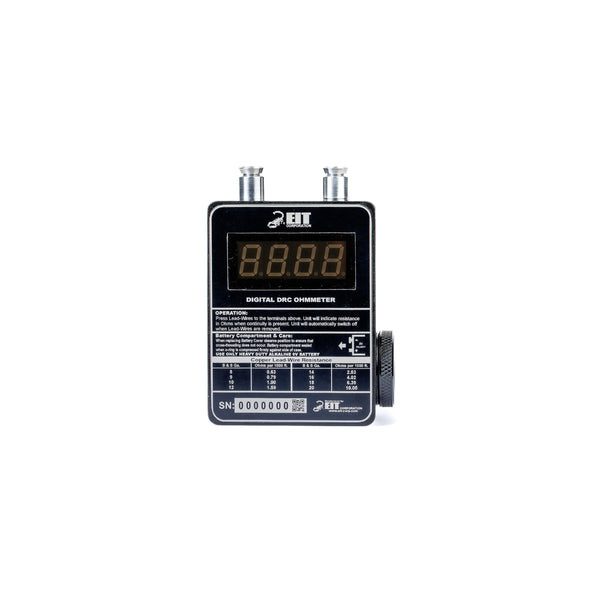
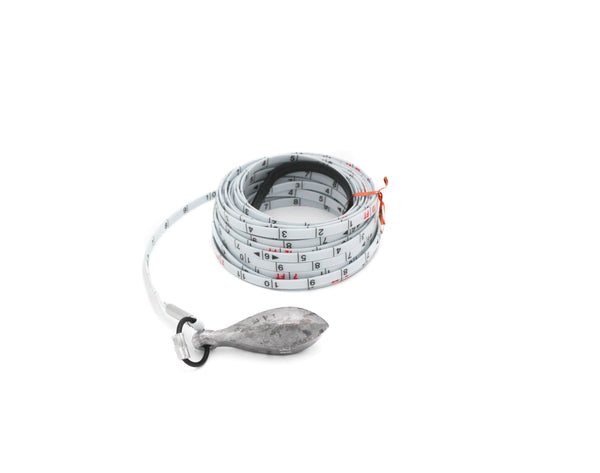
Measurement is the part of a drill and blast day that nobody celebrates and everybody depends on. Wrong depth, wrong burden, wrong...

New here? Create a business account for your trade pricing. Already set up? Just sign in.
Create a business account I already have an account — Sign inCreate an account and your trade pricing is ready the moment you sign in — no waiting.