

The Problem
Explosive costs add up fast. Every hole, every shot, every shift.
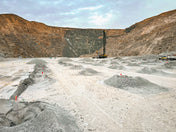
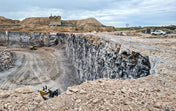
A large coal miner in the Powder River Basin was spending big on bulk explosives for their overburden shots. And with commodity prices squeezing margins, they needed to find a way to use less product per hole without sacrificing results.
Here's the thing. Cutting explosive doesn't help if fragmentation falls apart, overbreak gets worse, or digging slows down. The goal was simple: spend less on powder and keep everything else the same.
What They Tested
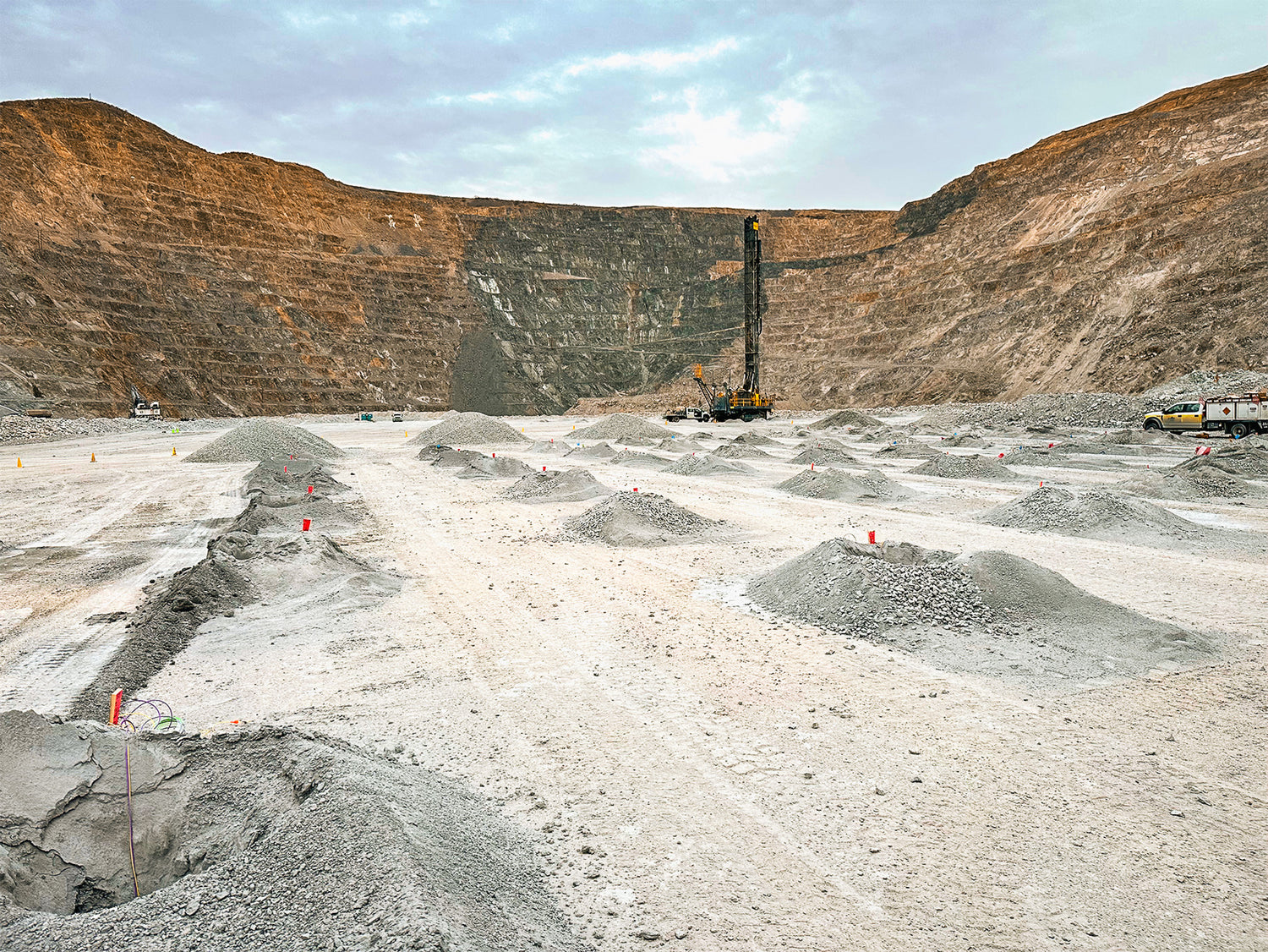
An independent consultant ran 4 test blasts comparing traditional loading to 3 different air deck configurations using MTi BLASTBAGS™.
The setup was straightforward. They took the same blast design and replaced a portion of the explosive column with an air deck. The BLASTBAG™ sits between the stemming and the explosive, holding position so the stemming stays where it should.
They tested reducing the explosive column by 3 ft (0.9 m) in the first two designs and 5 ft (1.5 m) in the third, adjusting stemming height across all blasts.
Different air deck designs were placed in different sections of the test blasts, so results could be compared side by side.
A few things they did to make sure the data was solid:
- Checked explosive height in every hole after loading
- Compared as-drilled patterns to design, less than 2% variance across the board
- Attached witness strings to the BLASTBAGS™ to confirm the bags and the stemming did not slip
- Took VOD measurements in every test blast to confirm explosive performance
- Compared dig rates from the shovel in the baseline area to dig rates in the test area
The Results
All test blasts hit the expected VOD. The bulk explosive performed the way it was supposed to.
But the numbers that matter are these, from Test Blast 3, fired at a reduced powder factor of 0.64 lb/yd³ (0.38 kg/m³):
| Metric | Baseline | Air Deck | Change |
|---|---|---|---|
| Digability Index | 160.96 | 163.86 | Not adversely affected |
| Payload (tons/bucket) | 106.57 | 109.15 | +2.4% |
| Cycle Time (sec) | 44.10 | 43.70 | -0.8% |
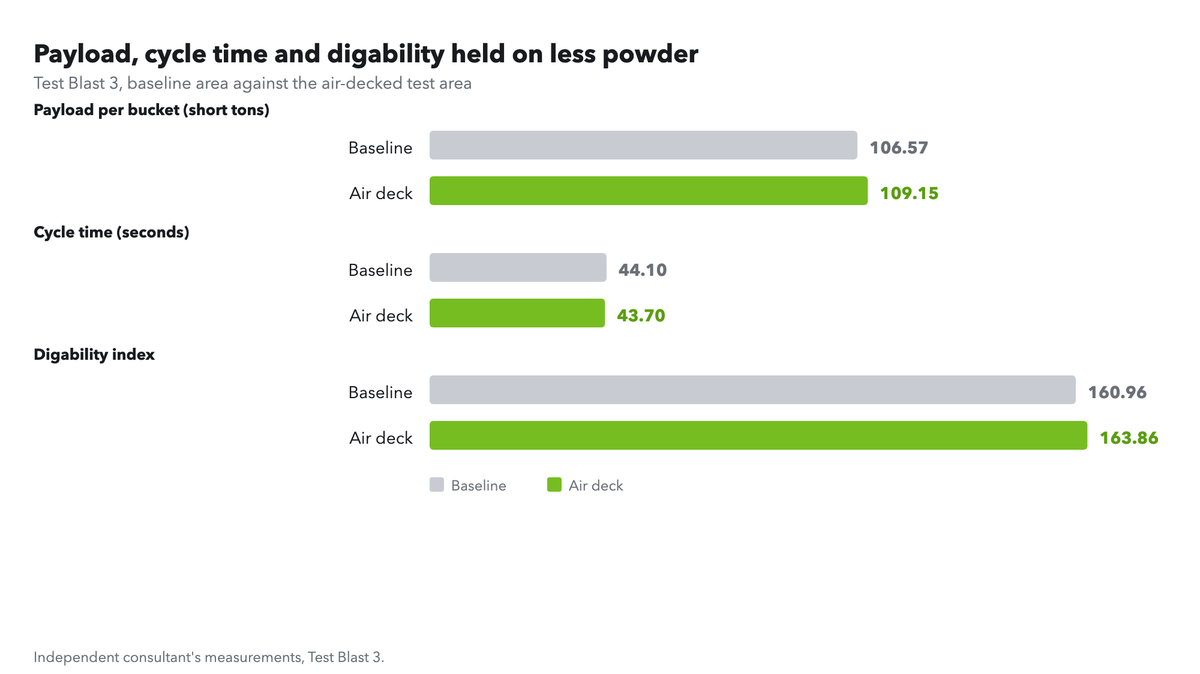
Read that again. Fragmentation didn't suffer, payload went up slightly, and cycle time stayed where it was.
Test Blast 4 confirmed the same results.
So What Does This Mean?
By replacing a portion of the explosive column with an air deck, this mine reduced their powder factor without compromising dig performance, fragmentation, or cycle time.
The mine estimates it can cut explosive use by as much as 5,840 short tons (5,300 t) a year. That works out to roughly USD $1.6 million a year on bulk explosive alone.
The extra time to put a BLASTBAG™ in each hole? The study called it negligible, and the cost-benefit came out positive.
What Happened Next
The mine adopted air decking in all their overburden shots. They're planning to trial it in their coal shots as well.
Two other miners in the region ran similar tests, both for overburden and coal. Both produced successful results. One has fully adopted air decking in their blasting procedures. The other is in advanced trials.
This case study was conducted by an independent consulting firm at a coal mine in the Powder River Basin, USA.