

Field Guide

Hole Protection: Don't Lose the Hole Before the Shot

6 min read

A drilled hole is money in the ground — and rain, wind, cuttings, and equipment traffic are all trying to take it back. How to cap every hole, and when to reach for a BLASTBAG™ vs a COLLARCONE™.

Hole Protection: Don't Lose the Hole Before the Shot

Every drilled hole on your bench is money in the ground. Drilling it took time, bit wear, and fuel — and until the shot fires, that investment is just sitting there. Open.

Here's the thing. An open hole doesn't stay a good hole. It starts dying the moment the drill moves on.
What an open hole costs you

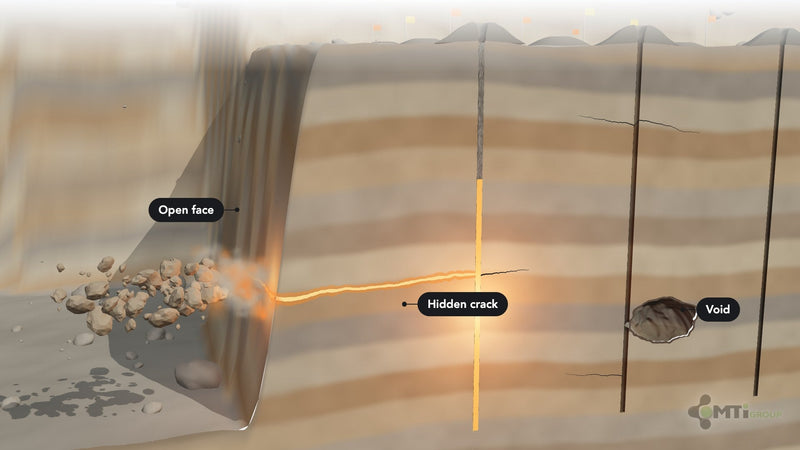
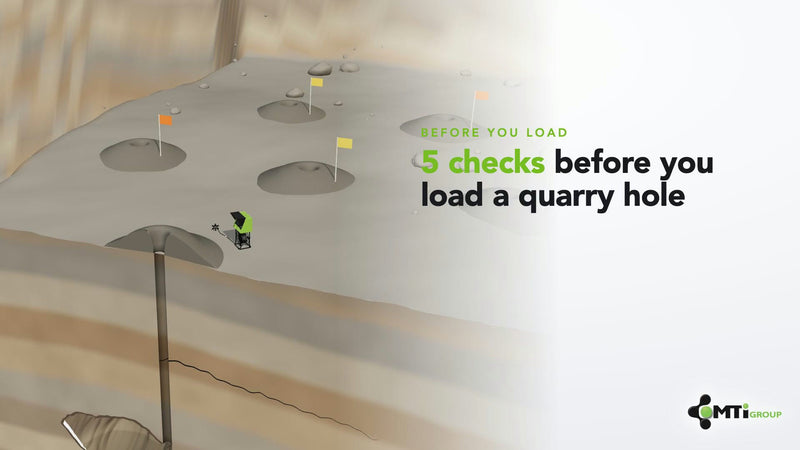
Cuttings fall back in. Every drilled hole has a pile of cuttings around it — looks like a little volcano. Equipment working near that pile pushes cuttings back down the hole, shortening it by 2–5 ft (0.6–1.5 m). Your design depth is gone before anyone loads a thing.

Rain changes your loading economics. A heavy rain fills open holes with water. That switches you off cheap ANFO and onto emulsion — and across a 100-hole shot, that swing is thousands of dollars in explosive cost. If the shot sleeps for days or weeks, one weather event can re-price the whole pattern.

Traffic can kill the hole outright. A truck driving over an unprotected hole can collapse the upper collar — especially where loose material sits above solid rock. Sometimes that hole is done. Now you're paying to re-drill it.

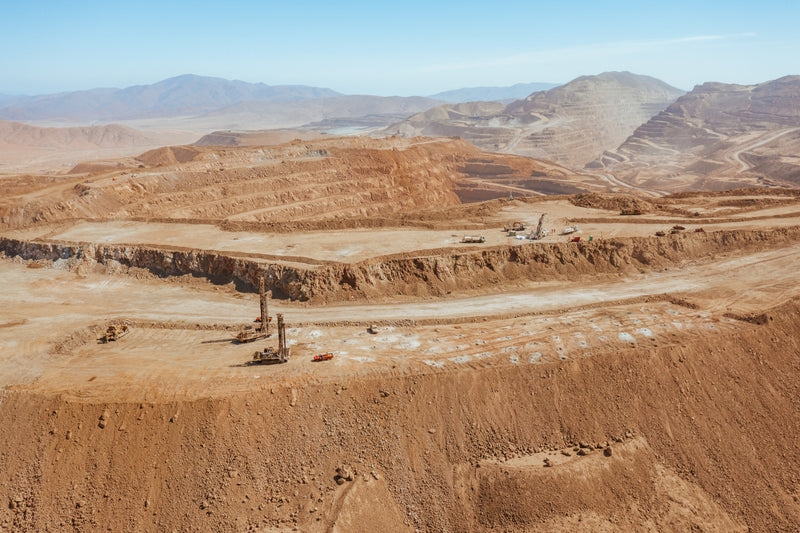
And on tight patterns, there's no way around it. On most patterns drilled with a 5.5 in (140 mm) bit or smaller, there's no road between the rows wide enough for a bulk truck — you either straddle a row or run right over one. Every hole has to be protected before the truck rolls in.

The fix is simple: cap every hole

Hole capping — collar protection — is a physical barrier in the top of the hole between drill time and shot time. It keeps water, wind-blown fines, and cuttings out, holds the collar together, and lets equipment pass over without closing the hole up.

Two tools do this job. Most crews end up owning both.

Option 1: a BLASTBAG™ at the collar

If your crew already runs BLASTBAG™ SOLO, EVO, or ACE II for air decking, you already own serious hole protection. Inflate a bag at the collar and the hole is sealed — rain, wind, cuttings, all of it.

Three things make the bag the strongest option on bigger holes:

It conforms to the hole you actually drilled. On larger holes, the top of the blasthole is often 1–2 in (25–50 mm) wider than design — drill steel deflection warps the upper section. A bag inflates to fit that oversized, irregular collar and still seals.

Trucks can drive right over it. An inflated BLASTBAG™ morphs under the wheel and pops back. Even an EVO won't burst under a truck. No digging anything out afterward, no cracked plastic in the hole.

Loading takes seconds. When the powder truck arrives, pop the bag with a retrieval tool or hawkbill knife. Full depth, clean and dry — load it and shoot it.

Collar protection — inflate a BLASTBAG™ at the collar and the hole is sealed.

Option 2: COLLARCONE™ — the dedicated hole saver

The COLLARCONE™ Hole Saver is the purpose-built tool: small end in the hole, large end out, walk to the next hole. It's the standard operating procedure at quarries and construction sites — drillers cap every hole as they go.

What separates it from the typical cone: it's injection-moulded, not rotationally moulded. Run a truck over one and it pushes down a few inches. Pry it out with a shovel and it pops back into shape — typical cones split into three or four pieces under the same load. The polymer is UV-stable and cold-tolerant, and it works out to about 3× the life of typical cones while being up to 20% lighter.

The details are built for the bench:

Closed-end (3–8 in / 76–203 mm) — cap every hole after drilling. Reusable: pick them up before the shot and they go back in the box.

Open-end (9 in / 229 mm and up) — stick it in the collar and load straight through the cone. It holds the collar shape on big production holes.

Downline tab — primed the hole already? Cap it and clip the downline to the tab so the line can't fall down the hole.

MTi Green — the only green hole cone on the market. Drilling companies that move between sites buy green so their gear never gets mixed up with the quarry's stock.

COLLARCONE™ Hole Saver — small end in, large end out, walk to the next hole.

Which one goes in your holes?

The field rule of thumb: under about 6.5 in (165 mm), the cone is the standard cap — drillers run them by SOP, they're reusable, and the economics per hole are hard to beat. Over 6.5 in, or anywhere the collar is drilled oversize or warped, the bag takes over — it seals collars a rigid cone won't sit right in.

If we had to pick one to own, it's the bag. It handles the collars a cone can't, it shrugs off traffic without needing to be dug back out, and it's the same product you're already using for air decking, splash bags, and deck separation. One SKU, a dozen jobs.

But a box of cones is still some of the cheapest insurance on the bench. For small-diameter patterns where drillers cap hundreds of holes as SOP, the reusable cone is the economical play — and the downline tab and load-through open-end sizes solve problems a bag doesn't try to.

A lot of crews land here: cones in every hole as the drill moves, bags added where the collar is rough, the shot will sleep, or rain is coming.

Ready for the next pattern?

Everything in this guide ships same-day on most orders. If you're not sure which answer fits your bench, call us at 606-663-4069 — we'd rather help you pick right the first time than ship you the wrong product.

And if your hole-protection situation doesn't fit any of these, tell us about it. We build a lot of what we sell because a blaster told us what was missing.

From the bench

Get the next field guide before you need it.

We write up what we learn from benches like yours — hole protection, wet holes, lost energy, fragmentation fixes. Two to four emails a month, and you can unsubscribe in one click.

Or browse hole protection gear