Field Guide

Lightning on the Blast Site: When to Watch, When to Pull the Crew

5 min read

A strike can set off a loaded hole from miles away. Here's why distance matters more than the view from the pit, the three stages every lightning protocol shares, and how to pick the detector that fits your site.

Lightning distance diagram: three numbered rings centred on a loaded blast pattern. 1 Watch at 60-130 mi (97-209 km), 2 Prepare and 3 Evacuate at your site's own thresholds, with a strike marked at 11 mi (20 km)

Nothing you buy will keep lightning off your bench. No detector, no protocol, no procedure. What you can control is whether anyone is nearby when the storm gets there.

A direct strike can detonate any type of electric or non-electric detonator. Even a nearby strike can be very dangerous. Static travels through the cap wire and the downline.

In one documented case, a strike fired a loaded hole about 11 miles (20 km) away. The bench had already been evacuated, so nobody was hurt. That single fact is the reason lightning protocols use distances most people think are far too big.
Why a distant strike can fire a loaded hole

The danger isn't always a direct hit. It's static induction.

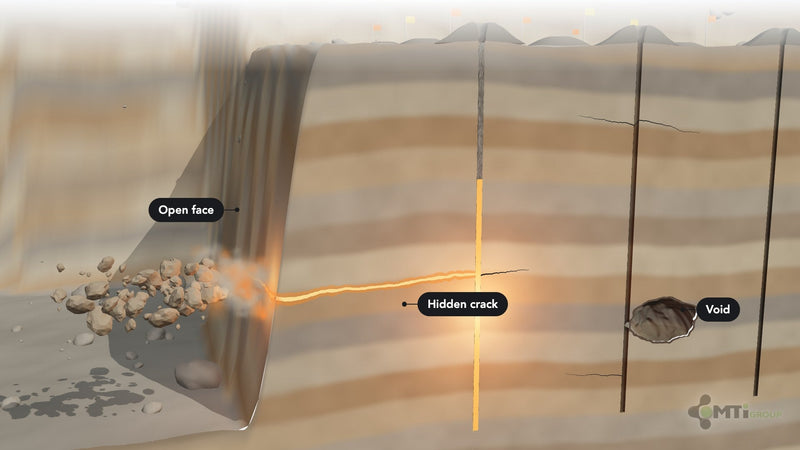
A loaded hole has wire running down it. When a storm builds enough electrical charge nearby, that wire can pick up enough induced current to initiate a cap. The strike itself does not have to be direct, only close enough to generate the right amount of static.

Here's the thing. This means the safe perimeter around a loaded shot during a storm is much larger than most crews assume, and it's why the trigger for action is a detector reading rather than what the sky looks like from the pit.

The three stages every protocol shares

Every site sets its own distances, and the numbers vary a lot. Tier-one mines tend to set them wider. But the structure is the same almost everywhere.

1. Long-range detection (60 to 130 miles / 97 to 209 km)

The detector picks up storm activity at long range. No action required yet. Nobody stops working.

What starts here is monitoring. Somebody is now watching the storm's track and how fast it's moving, so the next call isn't a surprise.

2. Medium-range alert (storm approaching)

The detector escalates as the storm gets closer. Crews prepare to evacuate.

That means finishing what's in hand, stopping loading, and getting ready to leave the bench. Not a scramble. Just an orderly stop so nothing is left half-done when the real call comes.

3. Close-range alert (evacuation threshold)

When the storm is inside the site's evacuation distance, everyone leaves the bench and the blast zone, and everyone clears the loaded-pattern perimeter.

Vehicles can stay. People don't go back into the loaded area until the storm has moved past the all-clear threshold, which is usually 20-30 minutes after the last strike detected inside the radius.

Two ways mine sites monitor lightning

Mounted, with radio calls. A lot of operations put a detector somewhere central, often the guard house at the site entrance. The guard broadcasts site-wide alerts over the radio at every threshold: first detection, approach, evacuate, all-clear. Every crew member on site hears the same call at the same time.

Carried by the blaster. Smaller crews can't justify a permanent install. The blaster or blast supervisor keeps a portable unit in their truck or clipped to a belt, watches it, and calls the evacuation.

Neither is wrong. What matters is that one person owns the call, and everyone knows the distances before the storm gets there.

Which detector fits your site

SkyScan Storm-Pro2 can be mounted and tracks storm activity from over 130 miles (209 km) out. The backlit display gives you more than a distance: storm ETA and time to clear, in miles or kilometers, with visual and audible alerts. It's rechargeable on any plug configuration in the world. This is the one for the earliest possible warning and the fullest picture of the storm.

SkyScan Model P5-3 is the handheld. It reports strike distance in four ranges out to 40 miles (64 km): 0 to 3, 3 to 8, 8 to 20, and 20 to 40 miles (0 to 5, 5 to 13, 13 to 32, and 32 to 64 km). A full digital microprocessor handles the distance calculation. It's the simpler, lower-cost way to put a reading in the blaster's hand.

Some sites use both; one central and one carried.

Before the next storm rolls in

A detector doesn't make a storm safer. It tells you where the storm is and how fast it's moving, so the call to clear the bench comes early enough to be an orderly walk instead of a scramble. That's its whole job.

If your site's distances aren't written down and known by the crew, that's the place to start. The tool only helps if somebody's watching it, and everyone knows what each alert means.

Both detectors ship same day on most orders. If you're not sure which one fits your operation, call us at 606-663-4069. We'd rather help you set it up right than ship you the wrong thing.

From the bench

Get the next field guide before you need it.

We write up what we learn from benches like yours — storm protocols, wet holes, lost energy, fragmentation fixes. Two to four emails a month, and you can unsubscribe in one click.

Or browse safety gear