

The challenge
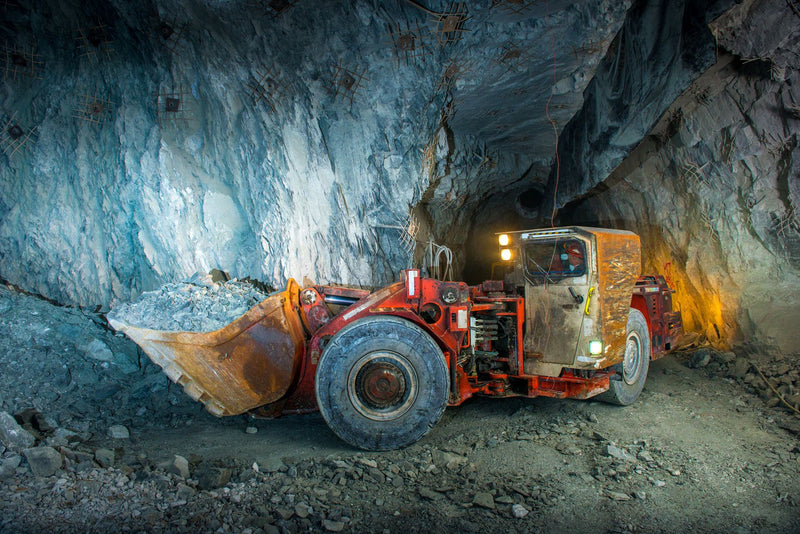
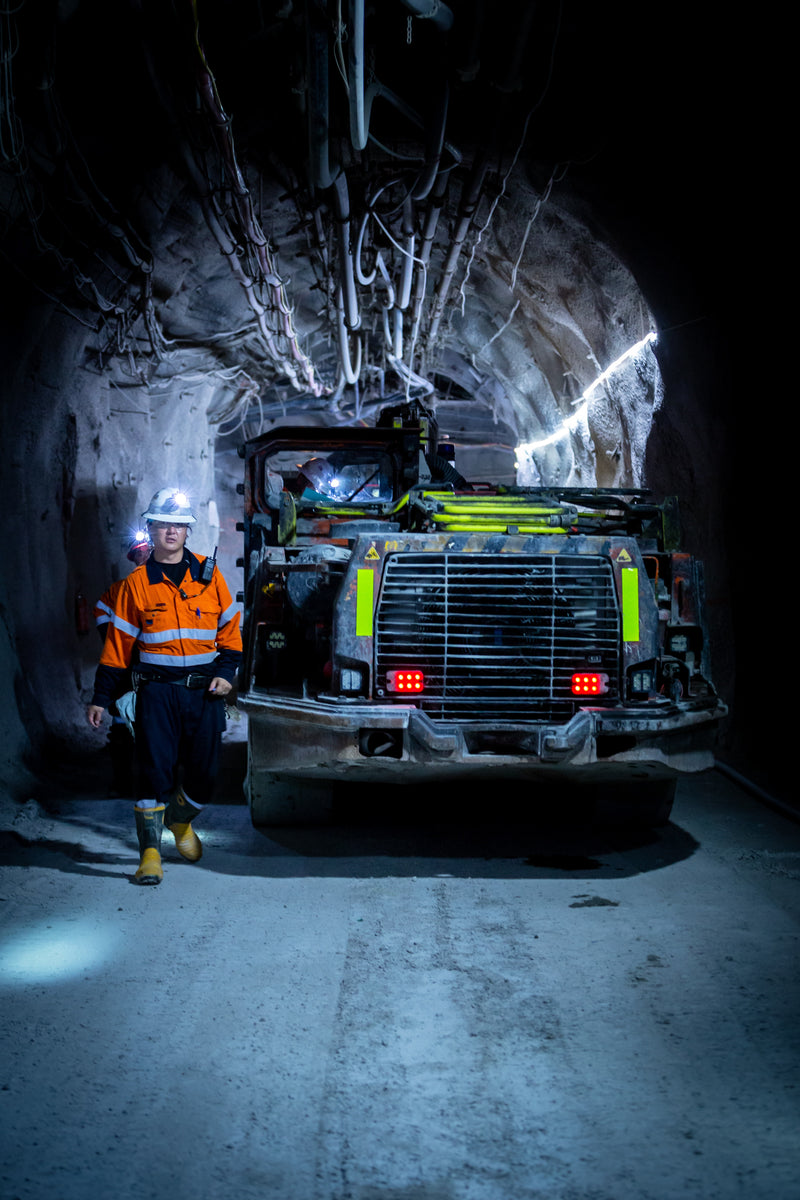
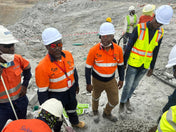
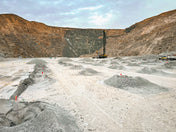
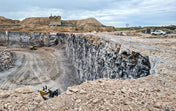
Located in the Sefwi-Bibiani belt in southwestern Ghana, this underground gold miner had been experiencing significant challenges in charging long holes in their open stopping application. At the time, the mine had been undergoing extensive seepage and slumping of emulsion in boreholes due to groundwater flushing the explosives in the holes. As a result, the loading process had become slow and cumbersome, with holes being charged multiple times as a corrective measure to reach the specified blasting height. During the wet season, this issue was further exacerbated by heavy rains endemic to the region, substantially increasing water inflows into the mine. Over the monsoonal months, water was frequently observed pouring out of the boreholes.
The solution
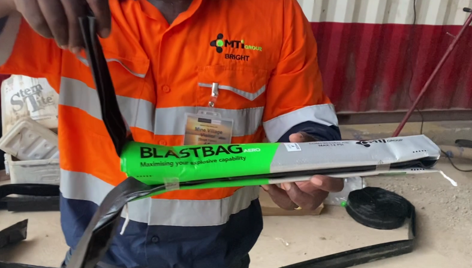
Having tried numerous retention plugs with no success, because of the volume of waterflows, the miner brought MTi Group to consult on possible solutions. After several discussions and a site visit, it was determined that the most effective solution would involve limiting the contact of the emulsions with water; rather than simply seeking to retain it with a mechanical plug. By addressing the large amount of water present, this option would inevitably address the seepage issue.Our approach combined our BLASTSHIELD solution and BLASTBAG
™
AERO to provide an impenetrable barrier to the groundwater in the form of an engineered hole liner and an easy-to-inflate gas bag to support the structure. Made from a multi-composite woven material, the BLASTSHEILD liner's gusseted design and rip-stop properties were perfectly suited to address the rugged conditions of the hole. This made it easy for the operator to deploy and achieve full-length lining of the uphole. Supporting the structure was a BLASTBAG
™
AERO which held it in place when inflated in the top of the hole. During the initial trials, the holes were remarkably wet, with water visibly dripping out of the boreholes, conditions synonymous with those that caused emulsion slumping. Installation of the BLASTSHIELD and BLASTBAG
™
solution was quick and easy. Using existing infrastructure (mine air and a charging hose), pre-cut sleeving was installed with results immediately noticeable.
The results
Holes with the solution applied observed zero emulsion slumping or drippage right after the charge hose was retracted and for the period after. This was achieved in one pass, without the need to revisit or reload holes. This was in sharp contrast to the non-lined holes (the control), where emulsion loss was seen over time. With the time saved, crews were able to work faster and more efficiently with fewer explosives wasted during the loading process.
The outcome
By eliminating emulsion loss through slumping and seepage, the miner was able to assert control over their blasts. With explosive performance improved and blast results closer to blast design, higher material recovery was achieved during the trial. While reducing the cost associated with wasted explosives. Satisfied with the outcome, the miner has since adopted the solution in areas with significant water flows, giving its certainty that no matter the conditions in the hole, the best blast result can be achieved.